


The return to routine after the holidays often comes with a small rise in stress for parents. Lunch boxes make a comeback, schedules tighten, and the familiar work–school–sleep cycle settles back in.
Very quickly, we find ourselves running between daycare, school, work, meals, and homework… all while genuinely wanting to spend quality time with our children. And yet, it’s not always easy.
When fatigue sets in and our availability decreases, the effects are quickly felt: children listen less, we repeat ourselves more, and tension builds on both sides. When the return to routine with children happens too abruptly, it can create a bit of chaos and overwhelm—for kids and parents alike.
The question, then, is not only how to return to routine after the holidays, but how to do it with more lightness, presence, and gentleness, so that this mindset is reflected in both the family atmosphere and children’s behaviour.
In this article, I’m sharing 7 simple tips to make the post-holiday routine easier—not just now, but all year long.
Predictability: a reassuring return to routine for children
During the holidays, the pace is often more relaxed and focused on enjoyment. Daily life becomes more spontaneous, sometimes less structured—and that’s perfectly okay. That said, too much improvisation can make some children more vulnerable, reactive, or oppositional.
In reality, predictability is a key element when it comes to children’s cooperation. The more they know what’s coming—and what is expected of them—the smoother daily life becomes. One of the simplest ways to offer this predictability is through a clear, familiar routine. This is why returning to routine after the holidays is much easier when a routine already exists: it simply needs to be officially reinstated, ending the small exceptions made during vacation time.
A routine is a bit like your child’s agenda or calendar. As adults, you know what your day looks like—your schedule, appointments, and game plan. This overview is reassuring and helps you anticipate the energy required. For children, it’s exactly the same. A routine provides a sense of security and includes the rules, habits, and expectations that come with it.
So, one of the best ways to return to routine after the holidays is simply to talk about it with your children and gradually put it back in place. Predictability supports their sense of security, reduces anxiety, and greatly facilitates cooperation—especially during key moments of the day.
When transitioning from vacation mode back to the daily grind—especially for more sensitive or anxious children—it’s very helpful to clearly name what will stay the same and gently prepare them for any small changes.
Concrete examples of what stays the same, depending on age:
- Toddler: “Just like usual, we’ll have breakfast together with your egg-and-cheese sandwich, then Daddy will take you to daycare with your plushie.”
- Older child: “Mom will walk you to the bus like before, and you’ll see the same teacher and friends at school.”
- Teen: “Your class schedule will go back to normal, and in the evening, you’ll still have your free time to read or watch your show after homework.”
Finally, to further reinforce this sense of security, a simple countdown of the last five days before returning can be very reassuring. It opens the door to questions, allows concerns to be expressed, and helps children mentally prepare for the return to routine—without unnecessary stress.
Family rituals: adding colour to the post-holiday routine
During the holidays, we naturally adopt small rituals that feel good: hot chocolate after playing outside, movie nights snuggled together, pancake mornings, pajama days… These moments nurture connection and create sweet memories.
When the routine returns, it can feel like these little joys no longer have a place—as if they’re reserved only for vacation time. Yet, it’s absolutely possible to keep these rituals alive, even in a busier schedule. And often, they’re what give meaning to our days, even when they start to feel repetitive.
Small rituals create precious emotional moments and lasting memories. They strengthen the parent–child bond and very concretely make daily cooperation easier. A child who feels connected is far more available to collaborate.
That said, these don’t need to be big events. Often, a simple, consistent gesture is enough to provide both security and joy.
- Saying “I love you” and sharing a hug at every goodbye and reunion
- Creating a weekly ritual, like a special Friday dinner or a cozy Saturday brunch
- Adapting mini-rituals by age: a short chat or shared show with a pre-teen, one last minute of silliness after bath time for a toddler—tickles and kisses included—or a few “special request” songs during car rides
When returning to routine with children, these repeated gestures become true anchors of reassurance and simple yet powerful moments of happiness.
5 minutes of reconnection: easing children back into routine
You’ve just spent a lot of time together as a family—and for some, maybe a little too much 😅. Children aren’t always restful, but taking the time to truly slow down together does wonders.
The return to routine often comes with an uncomfortable feeling: a lack of time. We become less available, and children feel it immediately. Less connection equals less cooperation… and more chaos!
To reduce this effect while still respecting your responsibilities—meals, homework, bath time—here’s a valuable tip: after school or daycare, take at least five minutes before giving any instructions.
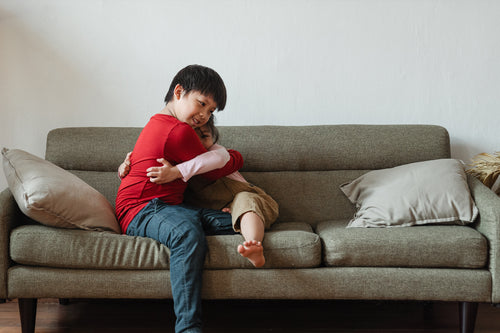
These five minutes are for reconnection. It’s a moment to refill everyone’s emotional tank. Whether it’s sharing a snack, chatting, staying outside for a bit, or collapsing on the couch for a group cuddle—any form works. What matters is giving each other your full attention.
You’ll notice that these simple five minutes help children feel calmer, more independent, and make the transition to homework, dinner, or other evening tasks much smoother.
Children’s sleep: the foundation of daily well-being
It can’t be said enough: sleep has a direct impact on behaviour and mood—especially during the return to routine with children. And let’s not forget parents 😏: a tired adult at the end of the day is far less patient than one who feels rested. In the same way, a tired child is often more irritable, less attentive, and less able to follow directions. They’re more vulnerable and prone to meltdowns.
Without dramatizing, it’s important to remember that children grow and learn best when they sleep well. Sleep allows the brain to consolidate learning and recharge for development. This makes a consistent bedtime routine absolutely essential—especially after the holidays.
During vacation, a few exceptions are normal and perfectly acceptable. Now, it’s time to return to a regular routine that helps children wind down before bedtime and ensures they get enough sleep each day, including naps and nighttime rest.
If falling asleep is an issue, it should be addressed as a priority, since lack of sleep can create significant tension for the whole family. When a child shows signs of fatigue, they should already be in bed to fall asleep at the right time.
Rather than relying strictly on age-based “recommended” sleep hours, remember that every child is unique. Sleep needs depend on your family routine, naps, wake-up time, and daily demands. You know your child and your schedule best—just make sure they’re getting enough sleep, and many behaviours and tensions will naturally regulate themselves.
Organization and logistics: simplifying daily life
When the holidays end, especially during the return to routine with children, the pace can quickly feel like a race. Pressure builds. Some parents thrive on improvisation, while others feel overwhelmed by it. Knowing yourself and adjusting your routine to feel lighter and less stressed is essential.
Remember: the more relaxed you are, the more relaxed your children will be. Your energy influences your responses and sets the tone at home—so it’s best when that influence is positive.
Identify your sources of stress and ask yourself what you can do to reduce them. For example, if making dinner feels heavy while your child is craving attention, there’s no need to spend your entire Sunday meal prepping—unless you enjoy it 😄.
The key is simplicity and anticipation, two important pillars of the post-holiday routine. Whenever possible, do a little extra to freeze or prepare leftovers for the week:
- Muffins or pancakes: double or triple the recipe for easy breakfasts
- Pasta or cooked meals: make extra to save for lunches
- Ground meat: cook more to use across multiple meals (tacos, burgers, poke bowls…)
The same principle applies elsewhere—starting a load of laundry in the morning instead of saving everything for the weekend can help avoid that overwhelming feeling and the frustration that comes with it.
In short, know your needs and adjust your organization accordingly. You’ll be able to enjoy daily life—even without vacation—by savouring simple moments with your children… or for yourself, with a book, quiet time, a walk, or your favourite show.
Everyday joys: extending the holiday spirit
During the holidays, we often treat ourselves to small gestures of kindness that we sometimes forget to maintain afterward. Try to extend that magic into ordinary days, even as routine returns.
Hot chocolate in the morning—even on the way to school? Why not! A bubble bath with a candle on a weeknight for a stressed teen? Absolutely. A kind note on a pillow, a surprise in a backpack, a text to your partner during the day… These simple gestures bring joy and strengthen family connection, enriching everyday shared moments.
Conclusion: creating a positive family atmosphere
Returning to routine with children after the holidays becomes much easier and gentler when the parent’s mindset is at the centre. Calm, presence, and confidence are contagious. By focusing on predictability, clear routines, reassuring rituals, and small daily joys, we create a more peaceful, secure, and joyful family environment for everyone.
When should you seek support if daily life feels heavy?
During the holidays, it’s not uncommon for some parents to find their day-to-day more challenging. Behaviours that took up little space on weeknights or weekends can sometimes stretch across the entire day. It’s exhausting—and it can also be a sign that the current dynamic no longer feels right.
Maybe you feel like you’re constantly repeating yourself.
Maybe evenings too often end in conflict, yelling, or threats.
Routines feel heavy, transitions chaotic.
Meltdowns, tears, opposition, disrespect, or negotiations take up more and more space.
If you’re feeling less joy and more frustration in your daily life, know that there are concrete, family-specific strategies that can help restore structure, balance—and most importantly, harmony.











Leave a comment