


Ah, anxiety in our children… We all recognize it: that tight knot in the stomach before heading to school, sudden refusals to go to daycare, or emotional outbursts that seem to come out of nowhere. For many parents, these moments of stress in a child trigger worry and sometimes guilt: “Did I do something wrong? Could I be helping my anxious child better?”
Before going any further, let’s take a moment to clarify one thing: there is no miracle solution that makes anxiety disappear overnight. It’s not a magic wand or a one-size-fits-all formula that works instantly. Easing anxiety in children is a long-term, evolving process that changes over time, alongside a child’s development… and is also shaped by real-life experiences.
Every child is unique. Every parent is too. You’ll improvise, adjust, try things out, take a step back sometimes, and above all, find your own strategies—what works best for your family. And that’s perfectly okay.
That said—and here’s the good news—there are basic principles that help many children (and parents) who live with anxiety. Solid foundations that, when applied with consistency and kindness, can make a real difference in everyday life.
Take Sophie, for example, mom to six-year-old Zoé. Every morning, simply getting ready for school leads to tears and protests: “I don’t want to go!” “What if I get in trouble?” “I want to stay with you!” Sophie feels powerless and ends up negotiating, promising, pleading… until Zoé finally leaves, still upset. These situations are exhausting and, over time, can create a tense family atmosphere.
If this sounds familiar, rest assured: it is possible to manage your child’s anxiety, help them feel more confident, and support them through difficult moments with a greater sense of security.
In this article, I’m sharing four simple, practical, and adaptable steps—not as a perfect recipe, but as a solid foundation you can build on, adjust, and evolve… at your own pace, and at your anxious child’s pace too.
Step 1: Recognize and Name Anxiety
The first step in helping an anxious child is recognizing the signs of anxiety and putting words to them. Children often feel worry but don’t always know how to express it.
How to do it
-
Observe behaviours: crying, yelling, sulking, refusing to go to school, physical tension (clenched hands, tight stomach).
-
Name the emotion: “I see that you’re feeling worried about school this morning” or “I understand that this activity makes you feel scared.”
-
Validate the feeling: the goal isn’t to fix the problem right away, but to show that you understand and accept what they’re feeling.
Simply putting words to anxiety helps a child step back and feel heard, rather than overwhelmed by emotions they don’t fully understand.
Step 2: Create a Safe and Predictable Environment
Anxiety often increases when an anxious child doesn’t know what to expect or feels overwhelmed by novelty. A clear, predictable environment significantly reduces stress and helps children feel grounded in their routines.
How to do it
-
Clear routines: display the steps of the day using images or a simple chart—breakfast, getting dressed, heading to school.
-
Prepare for transitions: announce changes ahead of time, for example: “In five minutes, we’ll go to the bathroom to get ready for school.”
-
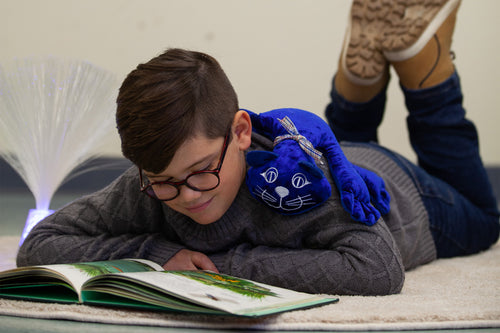
Create a calming space: a quiet corner where the child can retreat for a few minutes if they feel overwhelmed and need to reconnect with their safe bubble.
-
Limit unnecessary surprises: too many new elements in the morning or evening can intensify anxiety.
Consistency and predictability act like an invisible safety net—helping an anxious child feel protected and ready to face the small challenges of the day.
Step 3: The Calming Power of Hugs and Gentle Touch
After recognizing anxiety and creating a safe environment, the next step is giving your child concrete ways to calm themselves. And sometimes, the simplest and most effective gesture is a hug.
A firm hug with a trusted adult—where you gently squeeze and release a few times—or a long, gentle hug can help release tension and soothe an anxious child. If your child refuses physical contact, stay patient and offer a hug again later.
Step 4: Build Confidence Through Positive Encouragement
Anxiety decreases when an anxious child feels capable and develops positive self-esteem. Gradually, they learn to trust their own abilities, recognize how far they’ve come, and acknowledge the challenges they’ve overcome.
That sounds lovely on paper… but it’s not always easy to put into practice! As a parent, you may want with all your heart for your child to have strong self-esteem—and yet, you don’t control everything. You do what you can, and that’s already a lot.
Here are a few strategies within your reach 😊
In short: every small success deserves recognition to strengthen a child’s sense of competence. But be careful—compliments and encouragement should be adjusted to what your child can truly receive.
In other words, if your child doesn’t yet believe in their abilities, they may “reject” a compliment that feels too big—not because you aren’t sincere, but because they aren’t ready to hear it 😏. The key: the right dose, tailored to your child.
How to do it
-
Encourage initiative: “Well done for trying swimming lessons even though you felt nervous!”
-
Focus on effort rather than results: value perseverance and courage over perfection.
-
Create reassuring rituals: a kind word before leaving, a sticky note on the wall, a loving gesture, or a consistent “have a great day” ritual.
Every success, no matter how small, is another step toward greater confidence and less anxiety in children.
Conclusion: Anxiety in Children Can Be Managed—It Doesn’t Have to Take Over
Helping your anxious child isn’t an instant fix, but with consistency and kindness, it’s absolutely possible to navigate these challenging moments with more calm and confidence.
In summary:
-
Recognize and name anxiety so your child feels heard.
-
Create a safe and predictable environment.
-
Use the calming power of hugs and soothing strategies.
-
Build confidence through positive encouragement.
With these 4 steps, children can learn that anxiety can be managed, emotions can be understood, and the world can feel a little less intimidating—for them, and for you too.
If you feel the need to adjust your routines and strategies to better support an anxious child and improve family dynamics, you may consider parental coaching.






Comment (1)
Merci pour cette ressource claire et utile .
Nahayo Adèle